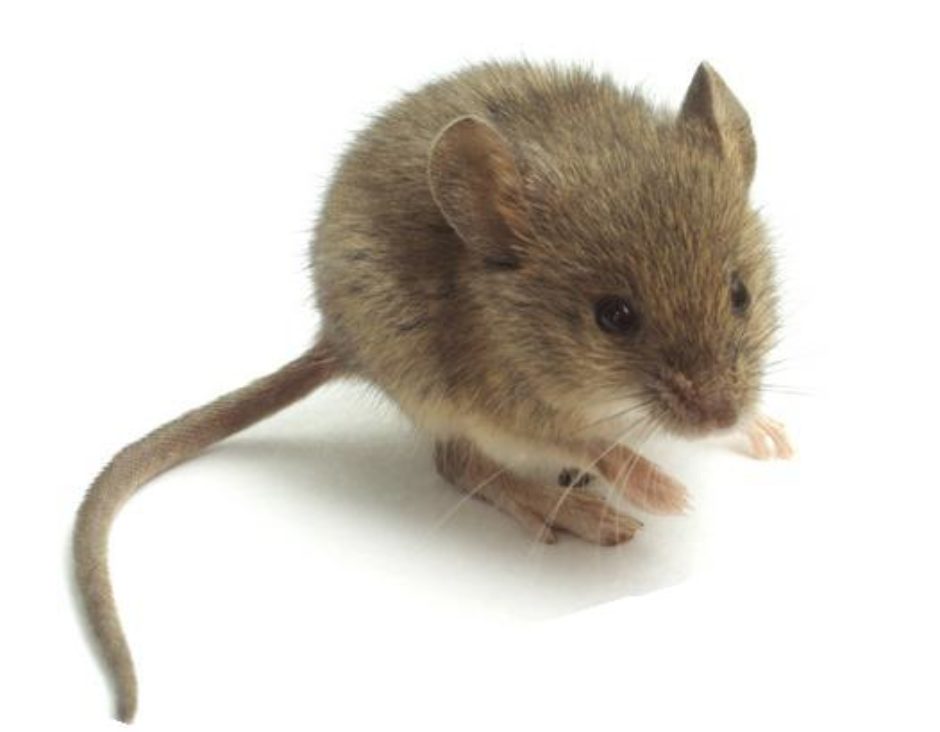
Posts tagged "rodent"

How to Handle Rodent Pest Control

With over four hundred varieties of rodents in existence, it is best not to take a chance in having them develop into pests in your home. Find out more on rodent pest control.

Mice, squirrels and chipmunks may perhaps conjure softened sentiments in a lot of people, but if you’re a homeowner, you know that they, amongst the other four hundred types of rodents, can easily bring about irreparable destruction to houses.

Rodents are characterized by their regularly developing teeth, that includes a pair of prominent incisors on the upper jaw that have to be kept short by way of any means feasible. Unfortunately, this frequently results in rodents nibbling and gnawing their way through the woods and possibly around your house. There is no discrimination for rodents in relation to finding things to munch on: plastic waste cans, fire wood piles, and home-grown veggie patches are all susceptible to the dental vandalism of rats, squirrels and rabbits.

How can rodent pest control be carried out? Rodent pest control must commence having a singular objective: getting rid of any and all rodents and their colonies. Some might have compassion towards rarer rodent pests, like rabbits and guinea pigs, but enabling them to get away will only come back as an even bigger issue down the line. Obtaining one rodent and tracing it back to its colony could be your ideal starting point in successful rodent pest control.

The next step would be to gauge the scale of intensity that’s necessary to get rid of the rodents. A vital factor to keep in mind is that the tinier the rodent, the more of them there are actually. For instance, it truly is additional widespread to obtain hundreds of mice in a colony than rabbits, who tend to travel in groups of less than a hundred. Regardless of their size, having far more of the very same rodent frequently means much more damages, which will help establish the chemicals and approaches utilized inside the distinct rodent pest control mission. If an army of mice have already infiltrated your home’s infrastructure, it would be extra successful to release a wide-scale fumigation process to ensure that all of the mice are wiped out on the spot, making it simpler to clean up the carnage afterwards. If a smaller group of rodents, including squirrels, have been feeding on your home’s exterior, setting up traps intermittently in corners and along the walls could just as effectively deliver the message out to all rodents and have them prevent your house within the future.

Whichever strategy you decide to utilize in a home-wide rodent pest control, probably the most critical factor to acknowledge is that no rodent has the right to exist in or close to your household and you ought to never really feel remorse in eradicating each trace of the obtrusive species. Keep rodents away from your residence for good with effective rodent pest control.

Lee Brakenstein happens to be an avid do it yourself pest exterminator. Just a few of his fields of knowledge comprise of insect control, how to get rid of rats, as well as overall rodent pest control.


Article from articlesbase.com

Related Rodents Articles

Be the first to comment - What do you think?
Posted by Cheryl Hanson - April 28, 2011 at 10:42 pm

Categories: Nature Mice   Tags: , , ,

Mice are Very Light Sensitive

Mice are mammals, and raise their young, have warm blood, a vertebrate, have a double coat of fur on their body, and a single layer on their tail.  Mouse hair is very easily shed into the nest, and mice will bring insulation or other soft materials into their nest if the smell of a predator is not on the material.  A mouse would not use a dog fur stash to stuff its nest!

They are very sound sensitive, so a ringing phone, or a loud buzzing noise would cause much distress to your mouse population.   They are sensitive to light.  Human environments are around 100 ftc, which is not great for mice.  They are sensitive to light above 25 ftc, and as such, their retinas will suffer a blinding progression called “phototoxic retinopathy”.

Be the first to comment - What do you think?
Posted by Cheryl Hanson - January 18, 2011 at 8:29 pm

Categories: Facts   Tags: , , , , ,

Mice and Owls

Meet your Mouse…Learn about Rodent Control Here!  Have some Fun, Learning, and Getting a Little Creeped out…

Why Owls Can be Your Best Mouse Trap!

Mice are often not completely understood, and the best way to fight them, is to learn as much as you can about them.   They are intelligent, not great at visual tools, smell you when you do not see them, and are better at sound than you are.

If you have mice, chances are, they are disgusted with your choice of music….geez, can’t you hear that distortion buddy?

Mice and Owls:  They are Hand In Hand Species

Owls need a key protein source, and mice provide the most perfect of foods for these flying birds.  The Barred Owl that has captured the mouse above, shows how easily they can hold and capture a mouse.  The size of the mouse is a perfect food for the owls in your neighborhood.
The most important thing for Owls, is a plentiful food source.  Especially if they are nesting.  If you have a large mouse or rat population, even if you have a multitude of squirrels, you are going to benefit from a great new idea.  See if you can learn more about Owls, and add in an Owl Nest Box to your area.
Owl Nest Boxes will allow you to build a large nest box in a tree or stand near your home, and a female and male owl pair will be glad to move in, and take care of your mouse population.  And, the best thing about this situation, is that when the Mice are gone,  they will move on, to other areas.

Be the first to comment - What do you think?
Posted by Cheryl Hanson - January 17, 2011 at 1:54 pm

Categories: Predators   Tags: , , , , , ,

Rodent Control Is Important

To achieve rodent pest control, you need to know your enemy.  Mice are small, food hunting experts with excellent hearing and smell.  They are rodents, and share the same scientific order called Rodenita, which is latin “to gnaw”.   Like the beaver, the squirrel and your pet hamster, they need to keep their incisors trimmed by chewing.  This is a major difference between other mammals and mice, as their incisors grow their entire life, and they need to keep their teeth short or they will die from starvation.

That is why you may see a squirrel chewing your Christmas lights, and having a good time destroying the strand.  They will chew wood, electrical wiring, and other soft materials.

Most rodents are small, like a gerbil, but the largest rodent, the capybara, is over a 100 pounds.   Rodents have five toes on their back feet, and 4 fingers, and a small, but not full thumb on their front feet.   The front “thumb” is more like a pad, to give them stability when they are standing on their front feet.
Rodents are social animals, and like to live together.  You can find a group in your attic, with many moms and babies nested close to each other.   They will use your food source to fill that attic, if you are not careful.
The mouse will reach its teenage years early-they can be born, and have babies themselves very quickly, at the ripe age of 6 weeks.  And, since they are pregnant for only 20 days or so, and can have up to 8 little mice in one birth, you can imagine how productive the mouse can be.  Almost always ready to have a litter, a female can have up to 48 baby mice in a year!
That means, if you have 6 mice, you could have over 288 new mice in one year, and over 13,000 in two years….
Scary huh? It is best to always consider this problem something to project manage.  It will be your best interest to continue to learn more about mice, to better solve your mouse problem.
Understanding mice is as simple as getting down to their level.  Mice are nocturnal creatures, mostly blind, working their way through your home with whiskers, an acute sense of sound and smell.   Your mouse is not friendly with other animals in your home, and will be threatened by dogs, cats, and rats.  You might have a bat problem in your attic, and that would be a deterrent to your mouse population.
They eat mostly grains, but are not picky.  Mice love to try almost anything, and will eat through your hershey bar collection,  sampling them all.  Males are pretty territorial with other males, so your man mouse will be a fighter.  If you see a daytime mouse, chances are you have been away at that time, and they have adapted to your schedule.  That is why you might be reading on a saturday afternoon, and your quiet time, will allow a scurry along the baseboard in your living room to the kitchen.
Remember the mouse holes in those comics on saturday morning?  That isn’t too far from the truth, but they would be fine with a crack in your baseboard, molding or exchange vent in the furnace.   Mice can live up to 98 degrees of heat, but don’t do so well with any temperatures lower than 70 degrees.   They like it perfect, and will die of heat stroke in the heat of summer, and the cold of winter. Kind of like the snowbirds you see traveling to florida and arizona in the winter.
Mice live up to 3 years, and have been studied extensively for medical research.  They have cancer, and many of the same later in life issues that we have.  Temperate climate, is key, as they can die from pneumonia.  They have been known to get stuck in greenhouses, and perish, leaving a nasty smell for the returning gardener.
Mice are clean animals, they like to groom themselves a lot.  Other mice will help out with this task, which is an ongoing obsession.  They will share nests with each other, and huddle together for warmth.  They like to be with the family they have, and will fight over mating but not much else.

Be the first to comment - What do you think?
Posted by Cheryl Hanson - January 17, 2011 at 1:50 pm

Categories: Facts   Tags: , , , , , ,

Pets and Mice

Have you found you have mice, even though you have cats and some dogs?  You are not alone!  Sometimes, the problem is fun and a game for them at the beginning, but, as the rodent control problem grows, you will see less and less interest.

Pets are not Interested

We think, oh, I have mice, I’ll get a cat, or borrow a neighbor’s cat.  That will fix it!  The cat you have at home is most likely happy to play and kill those first few mice, and some mice, will not enter a home with the smell of cats.  But, there are only so much your pet can do, and if you have a large problem, you should know you need to bring in some real ammo!

The best way to remove mice, is to learn about them. Here are some great tips!

  • Mice Like to see if you have a warm home.
  • Found a mouse? Chances are there are more….
  • Happy days are catching mice and finding them in the trap!
  • If you have pets, Mice will want to be your pet’s best friend. Until you have your mouse pest problem under control, you should only feed your pet in attendance, and not free feed.

Be the first to comment - What do you think?
Posted by Cheryl Hanson - January 17, 2011 at 1:40 pm

Categories: Predators   Tags: , , , , , , , ,

Understand Mice

You cannot rid yourself of mice without understanding the little furry beasts.  They are a pack driven society, and can have many requirements to survival.  Of course, they need food and water, a place to live and some special needs like a material to chew.
If your home was a large Plexiglas aquarium, you would have no mice.   They are not built into your home, and will need a reason to enter.   Building your rodent knowledge, and strategies on rodent control, you are empowered here to bring yourself forward with the best solution.  Mice are an intelligent species, and as such, should be respected.
If you are afraid of the little buggers, don’t feel bad.  They can make you jump in your spot, trigger your stress hormones, as they are a serious threat to human habitation.   You are merely reacting to years of evolutionary reflexes, as wild mice have always been a threat to our existence.  The Bubonic plague was carried by mice and rodents!

Be the first to comment - What do you think?
Posted by Cheryl Hanson - January 17, 2011 at 10:23 am

Categories: Facts   Tags: , , , , , , ,

Mouse Prevention

Choices you make at home can really be inviting to Mice!  If you have ground cover near your home, you are sending out an open invitation!

Your Shrubs and Landscaping Choices can really make a difference how Mice like or hate your home.  If they see lots of low, creeping and dense bushes and plants, they will love your home!

Mice hate strong smells, and will evacuate any chemical or intense smelling areas.  Your old fashioned cologne will not work, however.

Be the first to comment - What do you think?
Posted by Cheryl Hanson - January 17, 2011 at 10:16 am

Categories: Prevention   Tags: , , ,

Mice and Wires

Here is Why Your Wiring May be at Risk

Mice and rodents love to eat wires.  There is no real conclusive reason for this, but if you have put up holiday lights, and a squirrel is around, he will chew on that wire.

There is something about the soft feel of the wires, the chewing on the electrical circuits, and the fact that you wanted the lights there in his area.  They love to chew on wires!

A mouse will get into your walls, and can chew on your electrical cables until they are exposed.  This can create a fire.  If you notice that a switch works, and then sometimes does not, and you have a mouse problem, the wiring should be checked.

This makes for an even more dedicated rodent and mouse control process!  You will be sure to catch your mice and make it even harder for them to stick around if you find they are making some wiring chewing choices.  Believe me, this is maddening!

Be the first to comment - What do you think?
Posted by Cheryl Hanson - January 17, 2011 at 10:09 am

Categories: Facts   Tags: , , , ,

Infestation?

  • Mice are society creatures-they like how you have fixed up the place
  • Mice will eat pretty much anything-caviar dear?
  • Are you scared of mice? A lot people are afraid of mice!  It is very common.
  • If you hear scurrying noises at night, or when you wake in the morning, you have a colony!

Be the first to comment - What do you think?
Posted by Cheryl Hanson - January 17, 2011 at 9:58 am

Categories: Facts   Tags: , , , , ,

Feed the Birds, Not the Mice

Feed the Birds: Not the Mice

Mice are going to grow only if the food is growing with their family, so keep this in mind when filling your bird feeders.  If you have a series of feeders that spill bird food, and are constantly being attacked by squirrels, you are going to be feeding mice as well.

A great way to ensure you are only feeding the birds, is be sure you have good quality bird feeders.  It is better to have one long metal feeder, like a Droll Yankee Feeder, which restricts squirrels from using the feeder.

A base food capture plate, and a squirrel dome top, will be a good way to stop the squirrels from attacking the top of your bird feeder, and keep the food from dropping to the ground.

When the bird food is in the feeder, and is eaten almost entirely by the birds, you should have a very thin mouse population, and they will go elsewhere.

Is that the point?  Of course it is!

Another great idea is to ensure that you keep your excess bird food outside of your home and garage, not in plastic containers or plastic garbage containers, but old-fashioned metal tins with tight fitting lids.

All metal containers and bird food should be stored away from your home, and in the yard near your feeders.  If you have a metal container, it will confound the mice, and squirrels, but, your food will be safe and sound.  As well, if you keep bird food in areas where it is warm, you may allow some of your bird food to develop worms, and then you get moths.

Ewww…..

Just another reason to keep your bird food outside, in cooler areas of your yard, and away from your kitchen and home.

You do not have to stop feeding the birds, but, it is a good idea to use good feeders, and keep the food in the bird’s beaks, not in the nests of your local mice.

Let them find another bird feeder to eat from, and be sure to read more about Mice.  Learning about how they think, and what works to stop them from entering your home is a great way to stop mice.  That really is the best mouse trap around!

If you have the tricks of keeping them out, you are ahead of the game!

Be the first to comment - What do you think?
Posted by Cheryl Hanson - January 17, 2011 at 9:54 am

Categories: Prevention   Tags: , , , , ,

Next Page »