Posts tagged "House Mice"

House Mouse Behaviors

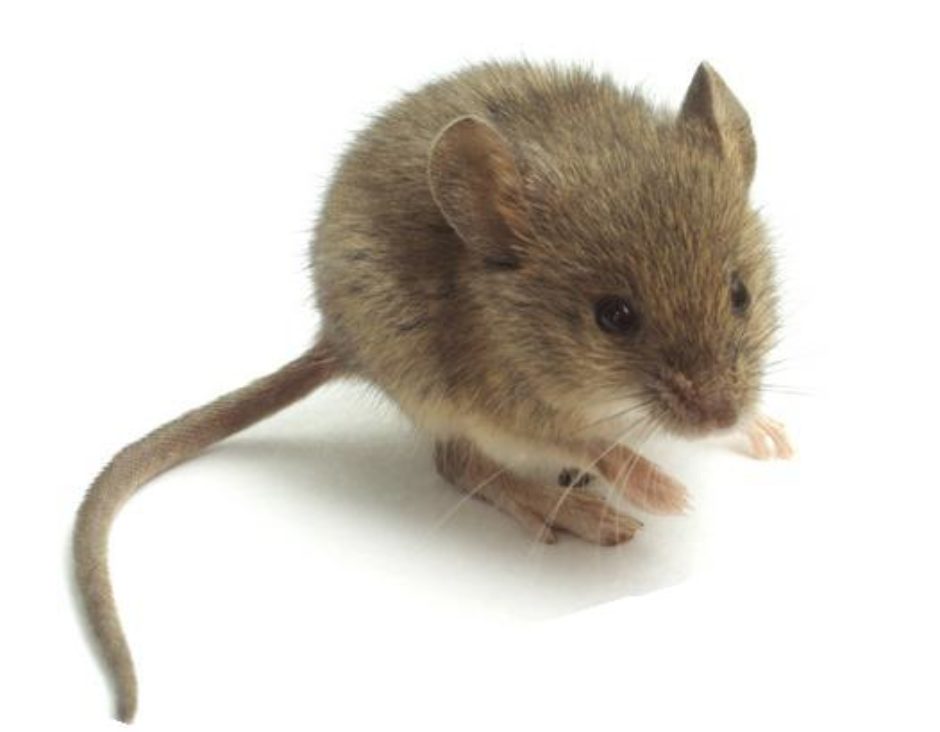
house mouse Our friend the house mouse is often found in areas outside of the home like fields, sheds, wood piles, behind hedges and bushes, living happily outside of our common areas.  The house mouse eats plants, seeds, and bugs and builds its home or nesting areas out of soft vegetation or leaves. They will be happy to move into a missing brick in a wall, and exist with a large community if the area permits such a group. Because the house mouse needs warm temperatures, and does not hibernate, the change in seasons will bring on changes to the decisions the house mouse makes, to ensure that they survive the coming cold months.

Looking for warmth of temperatures between 65 degrees and no more than 80 degrees can be a tricky task.  The humidity in the air must be at least 55 degrees as well.  And, when you couple the fact that a mouse must eat each day, they are often looking for a perfect world, and that really is your home.

Dispersal of House Mice from Your Home

The exploration begins with the outside of your home.  Looking along the bottom of the ground to no more than a couple of feet up, the house mouse will climb and smell for open warm currents, food scents and the crack that will allow a push of its skull into a space of even 1/4″.  They look for pipes that hold a small entrance, and follow the heat and food smells.  The fact is, if you prevent mice from entering your home with simple caulking technology, and the addition of peppermint smells on the outside and inside your home, you have created a difficult position for most mice.  They cannot get in if they continue to search for warm currents of air, and find none available, and will move on to your neighbors homes.

Once a mouse finds an entrance, he or she will urinate to indicate the highway of home to other mice.  The urine tracks can be easily seen with a black light, or an Ultraviolet light.  You can use this UV light to caulk easily, if you already have such a highway created.  The fact is, you want to discourage the new inhabitants, even if you have an existing house mouse population in your home.

Mice can travel over 1 mile to search out homes or buildings to save them from low food stocks and cold weather.  The fields of a farm are full of hobo mice, traveling to your farm house, looking for a way to get in.  If you have not caulked in a while, a UV light and a caulk gun are great defensive items, and will ensure that the mile they have walked is the mile in vain.

Importation from Grocery and Supply Trucks

The front door is another way that the house mouse can find entry, as they are often found roaming around truck stops, and other commercial loading areas, where food is plentiful.  The house mouse is often in many of our commercial transport areas and trucks, and is often on the rail system as well.  The boxes and crates of food and stored soft good items, often carry nests and little ones with their parents.  Easily hitching to our local retail environments, the mice that tag along with such stocks, are often ready to explore their new environment, and bring with them, strong genes for new breeding that will produce healthy babies.

Town-homes and Apartment Complexes

Your local apartment building is the mega housing complex for most house mice.  When you move into the complex, inquire about their rodent removal process and plan.  Look for outside bait boxes and traps, to see that they have commercial trapping plans in place.  The combination of outside non-caulked areas of the complex, and the many hitchers that can ride into the front door of the complex with your neighbor’s supplies, the house mouse can really benefit from this uncontrolled plan of many human’s living together.

If their is a restaurant on the lower level of your apartment building, the chance of house mice infestation is very high.   The high amount of piping, utility wires and tunneling that reside within the halls and walls of an apartment complex, make for easy traffic from one food full apartment to another. Even if you are a good mouse prevention expert, chances are, one of your neighbors will  not be, and the food is available, and the warmth factor is covered, with many areas to nest and live.

Over the length of the fall and winter months, the infestation in such communal buildings can be quite large.  The only prevention methods used by most apartment dwellers are trapping methods, as they may not have utility access, or the ability to prevent the entrance with caulking and information to neighbors.

If you have an infestation, your health is in danger.  The education of your property company, and the neighbors is the first step.  Then, a plan of prevention and trapping is in order.  With the new information, you can create a clean and mouse free apartment, that will eventually smell and feel better, as mice create quiet a lot of debris and fecal matter.

Mice in the walls can be seen when any building is torn down, and you will often find the problem simply relocates, as the need for food and warmth is very dire.  The mice will search with warm currents and food smells.  Ensure your home and office has these currents covered with caulking and peppermint.

It is hard to remove mice from urban areas, as humans build large intricate utility areas underground and in construction areas, which are not often visited by humans after the building is completed.  These become the highways of the city mouse, and they are often nesting and housing areas in a pinch.  The problem with the pipes and utility areas are they are often too noisy for mice, and they do not like the electrical noise or water pipe noise that is constantly running through such installations.  They will use them to move sight unseen, from one hospitable building to another, and find their new mate or nesting area via this highway.

Nesting is the Key to Understanding Mice

When you build a home, think about the covered areas of your insulation and how those areas can be covered and caulked.  It is important to build your home with areas between the environment and the living areas, and as well, how those areas are tightly covered.  The small step of keeping a tight enclosure on insulation, can create an inability for your house mouse to nest.

But even then, without walls or insulation areas, the drop ceiling you have installed is a perfect nesting area, as the warmth is often in the ceiling.  The stock of toilet tissue in your store room, creates a perfect nesting material, with an easy way to grow a rising mouse family.  The beach towels you store in the closet, are a comfy and easy mouse nest.  The hot water heater can be a nice nesting area, as it is warm, and not often too noisy.

Female mice clean and nest to protect the new mice she births, and she can have up to 48 mice in a year’s time.  This new population is available to have their own young within a few weeks.  Within this time, your home can become burdened with these new dwellers in a very short period of time.

Adding trapping plans to your home, peppermint in storage areas, as well as electrical frequency boxes that mice hate, you can remove this population.  Be sure to search through our site to find the best plan for your situation!

Remember, a plan of action is only as good as the information you have to put it together, so learn where they are coming in, find out where they are nesting, trap and continue to make the trapping interesting to remove them, and continue until you are convinced you have solved the problem.  Be diligent and persistent on your mouse problem, as they are intelligent and will make your home unhealthy and very dirty with their constant feeding and marking.

Be the first to comment - What do you think?
Posted by Cheryl Hanson - June 13, 2011 at 8:35 am

Categories: Facts   Tags: , , , , , , , , , , , , , , , , , , , , , , , , , ,

How to remove a mouse infestation from your home

Mouse Traps
Two types of mouse traps have dominated the market for years – the traditional spring snap trap and the glue board. The spring snap is generally considered to be more humane because death is instantaneous. The glue board, on the other hand, will hold the mouse to its sticky surface and keep it there until it starves to death.

Keeping Mice Out
A mouse will find its way into your home through an opening the width of a pencil. It is recommended that you to seek out cracks and crevices throughout your house and seal them up quickly with a good caulking compound. Not only will you deter mice, but other bugs and insects will find it hard to find their way in. Plus, your heating and air conditioning bills will go down.

Clean Up
Mice love to feast on the same things as teenagers and college students. Junk food left lying around on tables, rugs, counters and under furniture. Mice will be less likely to pay you a visit if you make your home a bit less hospitable by cleaning up all  crumbs and foodstuffs. It’s time to say good bye to the stray Crunchie and the half-eaten Mars bar.

Mouse Poison
There are certainly a number of poisons on the market to bring get rid of your mice. Poison is not only harmful to mice, but pets and humans can become seriously ill when exposed to the toxins. Poisons should only be used in extreme cases of mouse infestation.

Plug Their Holes
In cartoons, mice usually enter and exit a room from a neatly rounded hole in the skirting board. In real life, their doorways are not too different and are pretty easy to spot if you are actively looking for them. You can make life difficult for your mice by tightly plugging the entryways with steel wool, which they can not gnaw through.

Always More than One
Do not be fooled by a single, solitary mouse. If you have one mouse in your house, you can be sure that there are several others in there too. House mice live in family units, often grooming their mates and offspring. Getting rid of mice quickly is crucial because they start breeding at three months, give birth to litters of 4-6 babies and have a life expectancy of four years.

Is There a More Humane Trap?
There certainly are traps that do not kill mice and simply imprison them in a cage until you come along to free them. However, mice tend to return to their home so you must drive miles and miles before releasing them into the wild, where they will most likely die a horrid death anyway (remember that these are house mice you are introducing to the great outdoors). So don’t fool yourself by using these expensive “humane” traps.

Do Mice Really Like Cheese?
Actually, no! Research has shown that mice do not prefer cheese to other foods. Use peanut butter as bait if you want to lure mice with food they will be tempted by.

You Can Get Rid of Mice
Mice are one of the most common of household rodents and they are not the easiest animals to get rid of. The two prong strategy should be employed to effectively rid your home of mice. First, traps should be used to catch mice already in your house. Secondly, every effort should be made to seal off and plug all mice entryways. Thoroughly cleaning your house and removing stray foodstuffs will also deter mice from making their way into your home.

This article was created by David Etherington for more information on pest control please visit his website leeds Pest control.


Article from articlesbase.com

Related Mouse Infestation Articles

Be the first to comment - What do you think?
Posted by Cheryl Hanson - March 29, 2011 at 10:41 pm

Categories: Nature Mice   Tags: , , , , , , , , , , , , , , , , , , , , , , , ,

A World Of Mice And Its Environment

Mice or rats need to eat poison bait each day for about a week before they die. Mice gnaw into the packet to feed on the bait. Block style baits are also very effective. Mice seldom venture far from their shelter and food supply, so space traps no more than about 10 feet apart in areas where mice are active.


Mice reach sexual maturity at between five and six weeks of age and have tremendous reproductive potential. They breed throughout the year and may produce as many as eight litters in a single year, with the average litter consisting of four to seven pups. Mice should be fed a commercial pelleted mouse diet and water ad lib. These diets are nutritionally complete, but they still need a large variety of vegetables. Mice have become powerful, living research tools.


Mice have even been known to trim the plants along their runways. In the winter tracks can sometimes be seen on snow. Mice gather seeds that have fallen or blown onto the sand or climb plant stems to harvest attached seed heads. Sea oats make up the bulk of a beach mouse’s diet ( Figure 5 ). Mice love grass seed. Or birdseed or pet foods.


Mice are smaller and therefore can enter narrower openings, making rodent-proofing more difficult. They have limited areas of movement (home range) and require little or no free water. Mice weigh between one and two ounces. Wild mice are active at night, but domesticated mice can be active throughout the day. Mice are very good climbers, and can enter houses through roofs just as easily as they enter at the ground level. Once each and every one of these openings is properly sealed the mice will no longer be able to enter the house.


Mice that live in the fields eat seeds, roots, nuts, berries, and insects. Mice that live in barns eat grain and cattle food. Mice contain at least one button and sometimes as many as three, which have different functions depending on what program is running . Some newer mice also include a scroll wheel for scrolling through long documents. Mice with less image-processing power also have problems tracking fast movement, though high-end mice can track at 2 m/s (80?inches per second) and faster.


Mice constantly explore and learn about their environment, memorizing the locations of pathways, obstacles, food and water, shelter and other elements in their domain. They quickly detect new objects in their environment, but they do not fear novel objects as do rats. Mice are agricultural pests in some areas, however, and they do consume and contaminate stored human food with their droppings. They also destroy woodwork, furniture, upholstery, and clothing. Mice will gnaw to enlarge such openings so they can gain entry.


Mice originated in Asia and spread through Europe many centuries ago. In the 1500s, mice arrived on the ships of the explorers in what is now Florida and Latin America.


Females are ready to mate every four or five days. When males and female mice mate, the male’s sperm enters the female’s body and joins with eggs inside the female’s body. Females can have up to four litters per year with an average of three to six young per litter. The gestation period is from 22 to 25 days long. Females produce litters of four to eight young after a gestation period of three weeks; under favorable conditions they breed throughout the year. The young mature in two months.

Jigfo.com is a global platform for sharing and learning knowledge. For more information on this article topics visit:

http://www.jigfo.com

http://baitdogs.jigfo.com/

http://catsanddogs.jigfo.com/


Article from articlesbase.com

Related Wild Mice Articles

Be the first to comment - What do you think?
Posted by Cheryl Hanson - March 3, 2011 at 3:19 am

Categories: Nature Mice   Tags: , , , , , , , , , , , , , , , , , , , , , ,

Get Rid Of Mice: Practical Tips To Avoid Mice Infestation

One of the hidden dangers in any household is mice infestation. We do all sorts of things to secure our homes from intruders and burglars and possible other trespassers but these unwanted pests will always be a constant threat to our homes. There are two major types of mice: the household mice and the wild mice. House mice have heads and feet that are proportional to its body and its tail is about as long as its body. They have the same color throughout and like in the cartoon series, Tom and Jerry, they have flat upper incisors. Wild mouse have head and feet not proportional to its body. They have short and hairy tails. They have large ears and protruding eyes and their colors of their belly and feet may be different from its body. Most wild mice will feed on certain kinds of foods that are common in their area like grains, rice, wheat, seeds while house mice are scavengers and will feed on anything, Most diseases are carried by house mice but wild mice do also carry some diseases that may pose a danger to us, though not as imminent as the ones that house mice carry. This is due to the scavenging nature of house mice as they may ingest things that may not be harmful to them, but become carriers which can contaminate us with their urine or droppings. To find out if there is any mice infestation in your home, you can do the following things:

- Scour your premises to see if there are any holes in the walls, food containers and walls inside the cabinet. Most homes have double walls and it is easy for mice to use such walls as a passage way. Their ability to eat at anything enables them to make apertures in your homes.

- Look for mice poop which would be around a

Does the sight or sound of those furry little rodents make your stomach queasy? If so, you need proven methods for catching mice that work quickly and effectively. Come see why getting rid of mice is not as hard as you might think!


Article from articlesbase.com

WARNING: If you do not like live feeding, do NOT watch!! (just missed the kill but here she is trying to figure out where to go with it) This is the only mouse i ever plan to feed to my scorpion. I only wanted to plump it up and get it full bc me and my friend were planning on breeding our emps, and we didn’t want mine cannabalizing his, bc my female is larger than his male . She woudn’t touch the pre- killed one i offered her earlier, so i was forced to live feed. Emperor Scorpions have been recorded catching and eating small rodents like mice in the wild, so i figured this would be the easiest choice to get her full rather than trying to force feed her numerouse crickets or super worms. The mouse was quickly killed by the scorpions powerful claws with little suffering. I do NOT enjoy watching animals suffer this is strictly for mating purposes! ( I DO NOT RECOMEND FEEDING MICE TO SCORPIONS, AS THE MICE MAY SEVERLY INJURE IT RESULTING IN DEATH!!! FEED ONLY GUT LOADED INSCECTS TO MAINTAIN A HEALTHY DIET FOR YOUR SCORPION!!!) (any movement seen by mouse is residual activity of the last nerve firings that you are seeing, i assure you, its skull and neck were crushed in the scorpions claws causing instant death)

Related Mice In The Wild Articles

Be the first to comment - What do you think?
Posted by Cheryl Hanson - February 23, 2011 at 9:23 pm

Categories: Nature Mice   Tags: , , , , , , , , , , , , , , , , , , , , , , , ,